

Hi, my name is Josh Melara. I started working here at JKI back in February. You might have seen me in the back or I might have even helped you out in the shop if you’ve come in since then. I come from a butchering background, having butchered for supermarkets, restaurants, and butcher shops in LA.
I’ll be writing the blog entries from time to time. I hope you enjoy them.
Japanese Butchery Knives: Shapes and Functions
In the world of Japanese knives, each blade shape fills a specific purpose. Interestingly, many of them revolve around the butchering of either seafood or livestock. Whereas most kitchen knives are made to be thinner in order to achieve higher cutting performance, butchery knives are usually thicker at the spine and behind the edge. This serves the function of making the blades more tough and durable, being that they will be making contact with bone from time to time.
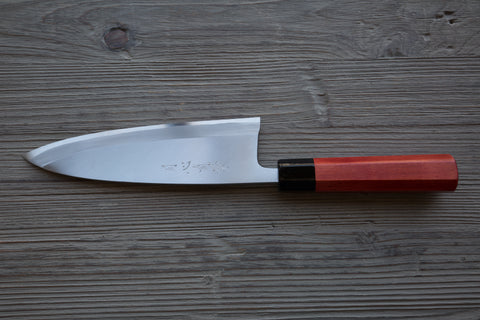
Deba - Exclusively used to fillet fish. Hefty and very thick at the spine, they need to hold up to contact with fish bones. Single bevel.
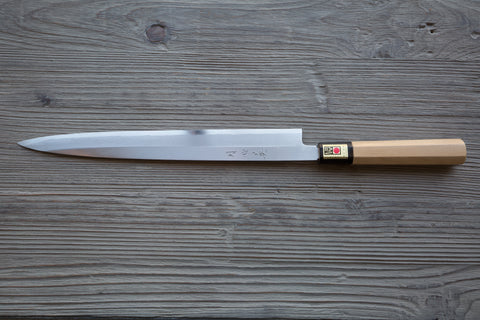
Yanagiba - Used to slice fish. 270mm to 300mm is the usual blade length. The longer the blade, the easier it is to complete a slice in a single stroke. Single bevel.
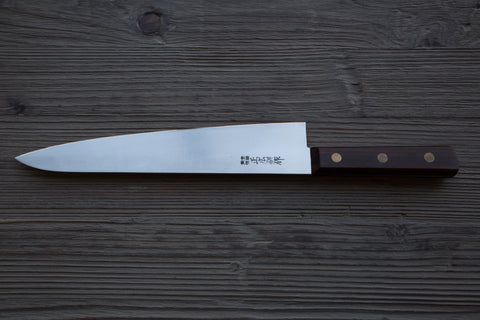
Gyuto - Generally used as a chef’s knife. Some makers use a more tough and durable steel when creating gyuto for butchery series (the can also be called Hirakiri in butchery series). They usually have a taller profile than a sujihiki. Double bevel.
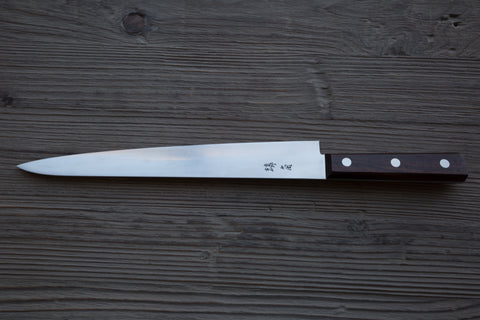
Sujihiki - General meat slicer. It has a less tall profile than a gyuto and a shape that is very similar to a yanagiba. Double bevel.
Hankotsu - Breaking/boning knife for livestock. The last third of the knife, by the handle, is unsharpened in order to scrape against bone without sacrificing the edge on the sharpened portion. This knife can also be called honesuki maru or Nishigata hankotsu. Double bevel, but highly asymmetrical.
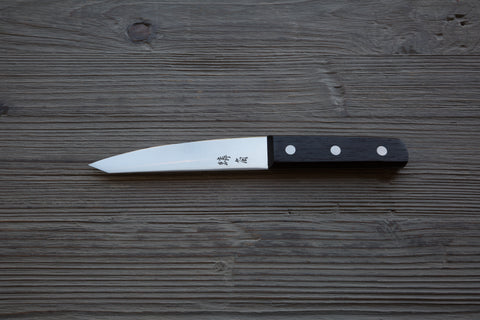
Honesuki - Breaking/boning knife specifically for poultry. The triangular shape is tailored to breaking down and deboning an entire chicken carcass. Videos on youtube show just how well designed and effective these knives are. Double bevel, but highly asymmetrical.
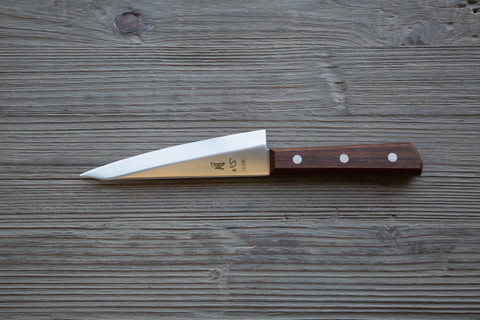
Kawahagi - Skinning knife for larger livestock animals. Double bevel.
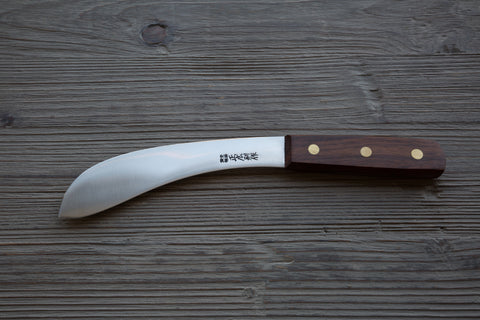
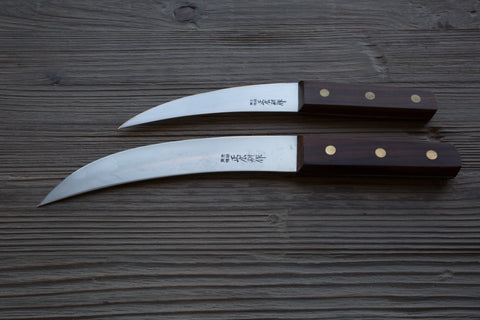
Atamatori - Long, curved knife for beheading larger livestock animals (lambs, pigs, cows). Also comes in smaller sizes, sometimes used for chicken. The smaller one is sometimes called kashiratori. Double bevel.
11 comments
Really Appreciated! I enjoy reading your blog posts about knives.
You should go here to get more information.
https://www.thebambooguy.com/collections/carving-knives
Yo
Hi, I am cutting for a specialty grocery chain, and was wondering which knife would you suggest for day to day cutting demands in a retail environment?.
Is there a Japanese knife for large whole animal (cow, pig, sheep) breaking down? The honkotsu above seems too small for a large cow. Is there anything similar to the western butchers cimitar?
Atamatori – Long, curved knife for beheading larger livestock animals (lambs, pigs, cows). Also comes in smaller sizes, sometimes used for chicken. The smaller one is sometimes called kashiratori. Double bevel.
atamatori
Interested in buying these I’m a meat cutter
Hi Joshua Melara,
I saw all videos. It’s really cool way of Chicken cutting using Deba Knife. I will definitely try this at my home. By the way, I am great fan o Japanese knife. So keep it UP.
Thanks
I am looking for a skinning knife for small animals, I see the big one for livestock, I am just wondering if there is a make better suited to skinning rabbits?
Thank you for the explanation Joshua.
Thanks for the post! Especially liked the linked videos!
Thanks Matus!
The Funayuki is essentially a thinner deba and was traditionally used on fishing boats. It is primarily used on fish with softer/smaller bones and is occasionally used for slicing, though not its primary function. Because it is thinner, you would see less splitting between the layers of the fish muscle.
As for the availability of funayuki, many craftsmen are capable of making them, but the demand for them isn’t high and people aren’t willing to learn how to use them appropriately. Most of the regions that produce funayuki do so for the surrounding communities and not for export. They are commonly used in home kitchens in coastal communities.